Project Title: DEVELOPMENT OF AN EFFICIENT SOLAR POWERED UNMANNED AERIAL VEHICLE WITH AN ONBOARD SOLAR TRACKER

The scope of electric powered unmanned aerial vehicle (UAV) missions is primarily constrained by the relatively low flight endurance that is characteristic of electric powered UAVs. The purpose in utilizing solar energy to power UAVs is to increase UAV endurance capabilities and ultimately achieve indefinite sustained flight. Traditional solar powered UAVs are designed to statically fix the photovoltaic (PV) cells on the top surface of the wing, keeping the cells virtually parallel to the earth’s horizontal plane during normal flight. This puts significant restrictions on both where and what time of year a solar powered UAV is able to capture enough energy from the sun for the PV cells to be advantageous.
Download Links:

Engineering Ebook: Practical Interfacing in the Laboratory: Using a PC for Instrumentation, Data Analysis and Control

The book contains five chapters, covering digital tools, analog tools, conversion between analog and digital signals, sensors and actuators, and data analysis and control. The 27 laboratory exercises can be used either in a college-level laboratory course or as working examples for practicing engineers and scientists who wish to apply sensor, low-level amplification, and microcomputer principles in their work in a practical and immediate way.
This material was developed for two one-semester laboratory courses in the Electrical Engineering and Computer Science Department at the University of California in Berkeley, EECS 145L: “Electronic Transducer Laboratory” and EECS 145M: “Microcomputer Interfacing Laboratory.” The purpose of these two courses is to provide upper-level undergraduate students with the tools needed to sense and control “real-world” quantities, such as temperature and force, as well as to display the results of “real-time” analyses, such as least-squares fitting, the Student’s t test, fast Fourier transforms, digital filtering, etc. It is assumed that the students have had some exposure to elementary analog and digital electronics, differential calculus and linear algebra, and the C programming language.

Download Links:
http://www.mediafire.com/?1nefzzcizqo

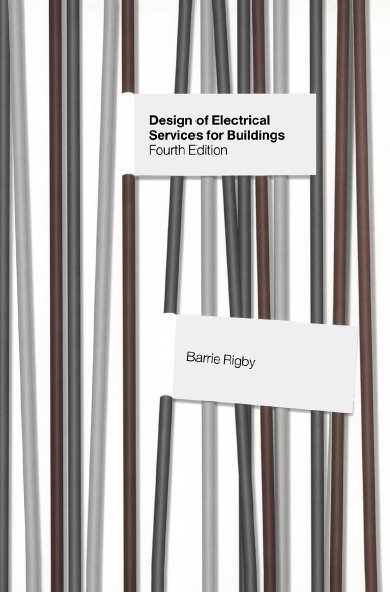
Engineering Ebook: Design of Electrical Services for Buildings 4th Edition

Building services engineers to be reasonably aware of the systems in use, and the duties that they perform.The pace of change of legislation, introduction of European Standards, is ever increasing. I have left the academic parts of the book virtually unchanged, with the exception of changes in terminology.
 Download Links:
http://www.mediafire.com/?mrtgzhwxmjz

Engineering Ebook: Practical Electronics Handbook, Sixth Edition

The book has been designed to include within a reasonable space most of the information that is useful in day-to-day electronics together with brief explanations which are intended to serve as reminders rather than full descriptions. In addition, topics that go well beyond the scope of simple practical electronics have been included so that the reader has access to information on the advanced technology that permeates so much of modern electronics.
Although the book is not intended as a form of beginners’ guide to the whole of electronics, the beginner will find much of interest in the early chapters as a compact reminder of electronic principles and circuits. The constructor of electronic circuits and the service engineer should both find the data in this book of considerable assistance, and the professional design engineer will also find that the items brought together here include many that will be frequently useful and which would normally be available in collected form in much larger volumes.


Download Link:
http://www.mediafire.com/?ynjizjjmzzk